


Hyundai Motor Group has won countless global awards for its products, highlighting the success of how its vehicle are design and engineered - a key element of that is Hyundai Motor Group's Namyang Research and Development Center in Korea. Here we go behind the scenes of what goes into the testing and develoment of Hyundai Motor Group's vehicles at it Namyang facility
Hyundai Motor Group (the Group) is rapidly advancing its electrification strategy, backed by a bold vision and a foundation of proven results.
As a global EV leader with award-winning models and cutting-edge electrification technologies, the Group continues to shape the future of mobility with a focus on its customers – and at the core of this transformation is the Namyang R&D Center, a powerhouse of innovation, located in Hwaseong, South Korea.
Namyang R&D Center: The Heart of Hyundai Motor Group’s Innovation
Established in 1996, Namyang is Hyundai Motor Group’s largest research and development hub. It oversees the entire vehicle development lifecycle – from initial design and engineering to testing and validation – for passenger cars, commercial vehicles, and next-generation mobility platforms. The Namyang center plays a pivotal strategic role in realizing the Group’s electrification roadmap and enhancing global product competitiveness.
It all starts with our customers, conceiving and engineering vehicles to deliver the highest standards of Quality, Dependability and Reliability – what we call ‘QDR’.
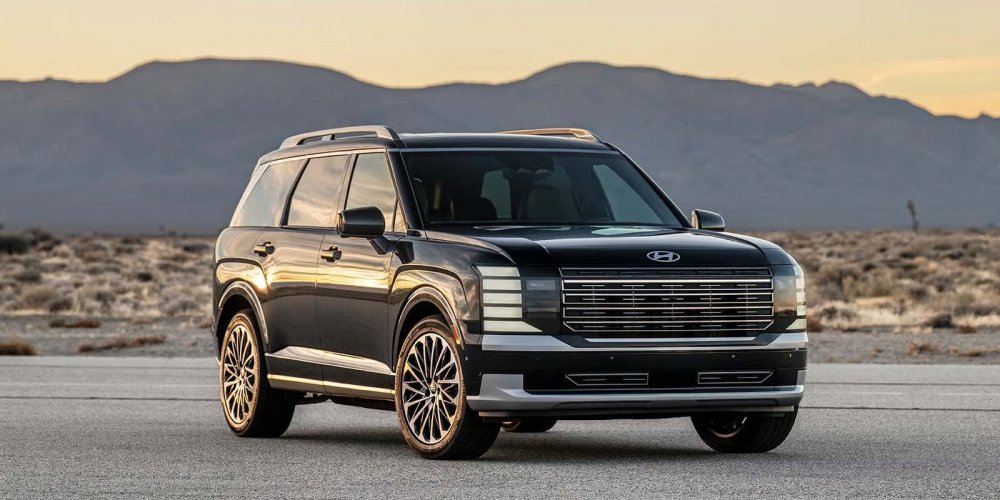
This industry-leading R&D facility has led the development of EVs such as the Hyundai IONIQ 5, Hyundai IONIQ 6, Kia EV9, and Kia EV3 – the past four World Car of the Year award winners from 2022 to 2025, with vehicles designed and engineered at Namyang taking a total of 12 World Car Awards since 2022.
Aerodynamic Testing Facility to Optimize EV Efficiency
Why It Matters
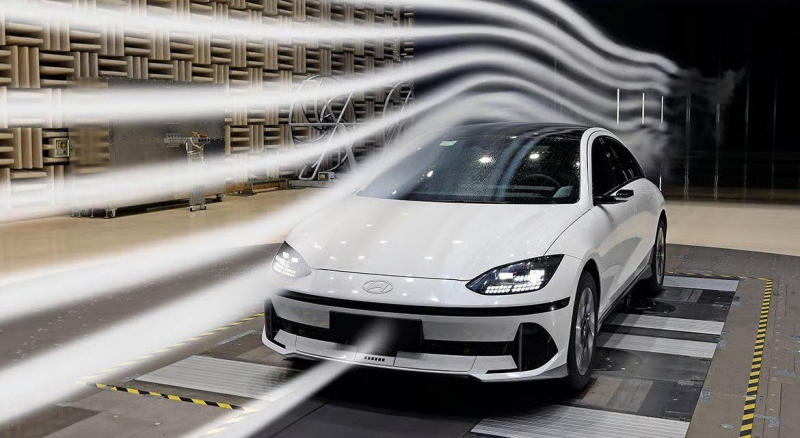
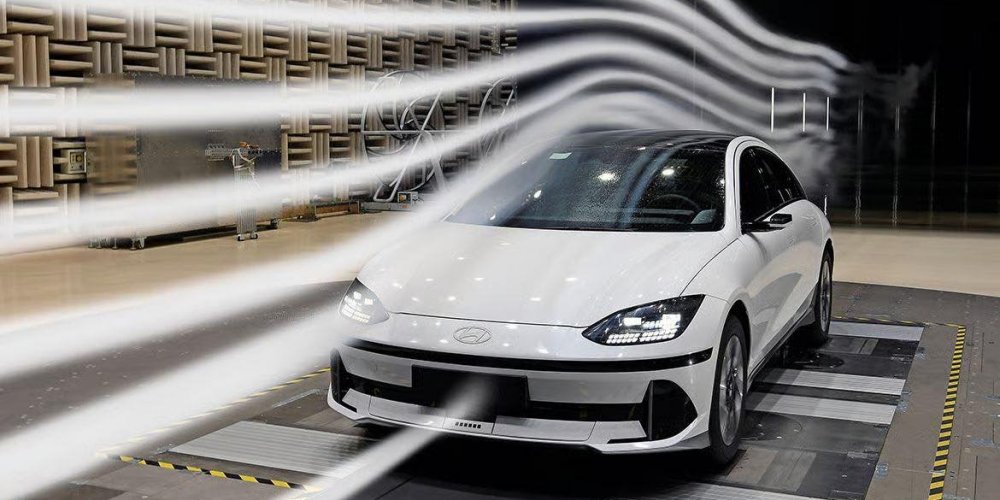
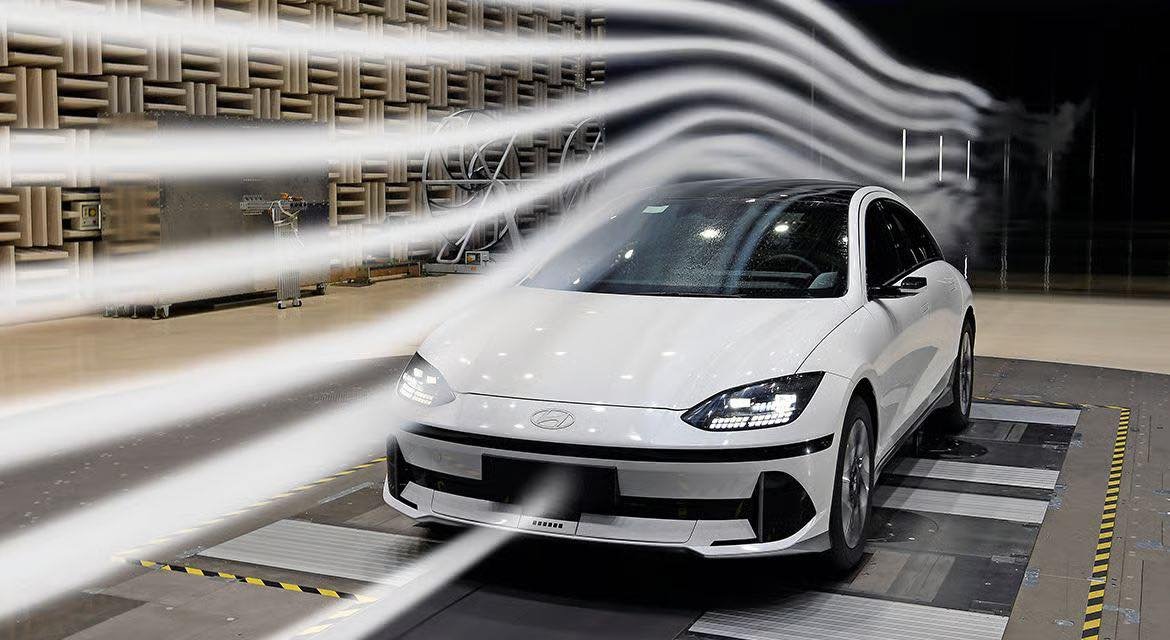
Aerodynamic efficiency is a key factor in EV range and performance. Hyundai is pushing boundaries with ultra-low drag technologies – both active and passive design – to maximize energy efficiency.
Highlights
Facility size: ~6,000 m² (about the size of a soccer field)
Wind tunnel: 3,400 hp system simulating airflow speeds up to 200 km/h
Noise reduction: Carbon fiber fan blades, cutting noise to 54 dB at 100 km/h
Ground simulation: Rotating belt system replicates ground-level airflow
Key Evaluations
Drag and lift analysis: Measures resistance and vertical forces
Wake flow optimization: Reduces turbulence behind the vehicle through the study of vortex patterns, improving efficiency
Aero Challenge Car
Hyundai Motor Group’s ‘Aero Challenge Car’ was developed as a research prototype to explore next-generation aerodynamic solutions, achieving a world-best drag coefficient of 0.144Cd. It features proprietary active aerodynamic technologies designed to reduce drag and boost efficiency, including:
Active Cowl Cover (ACC): Eliminates the gap between the windshield cowl and glass, reducing air pressure and improving windshield airflow
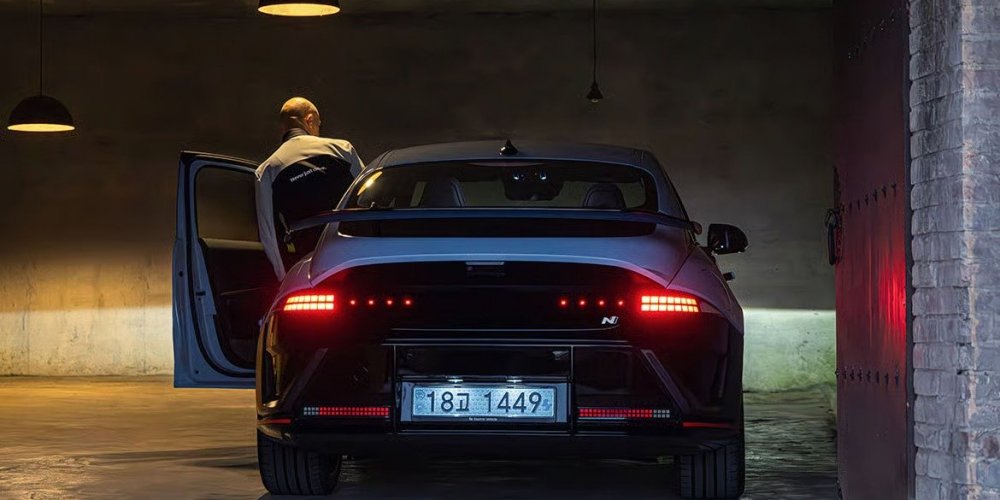
Active Rear Spoiler (ARS): Deploys based on driving mode to minimize vortex formation and enhance high-speed stability
Active Side Blade (ASB): Retractable blades extend the rear overhang by 40 cm to suppress side vortices and stabilize wake flow
Active Rear Diffuser (ARD): Fan-shaped diffuser unfolds from the rear underbody to control airflow and optimize wake dynamics
3D Integrated Undercover: Streamlines airflow, covering more than 87 percent of the underbody with a contoured 3D surface
These innovations are experimental and not yet production-ready but signal future directions in EV design to maximize aerodynamic efficiency and further enhance driving range and convenience for customers.